
Talking Tiles
Size, Thickness, and Installation Challenges
3/29/20262 min read
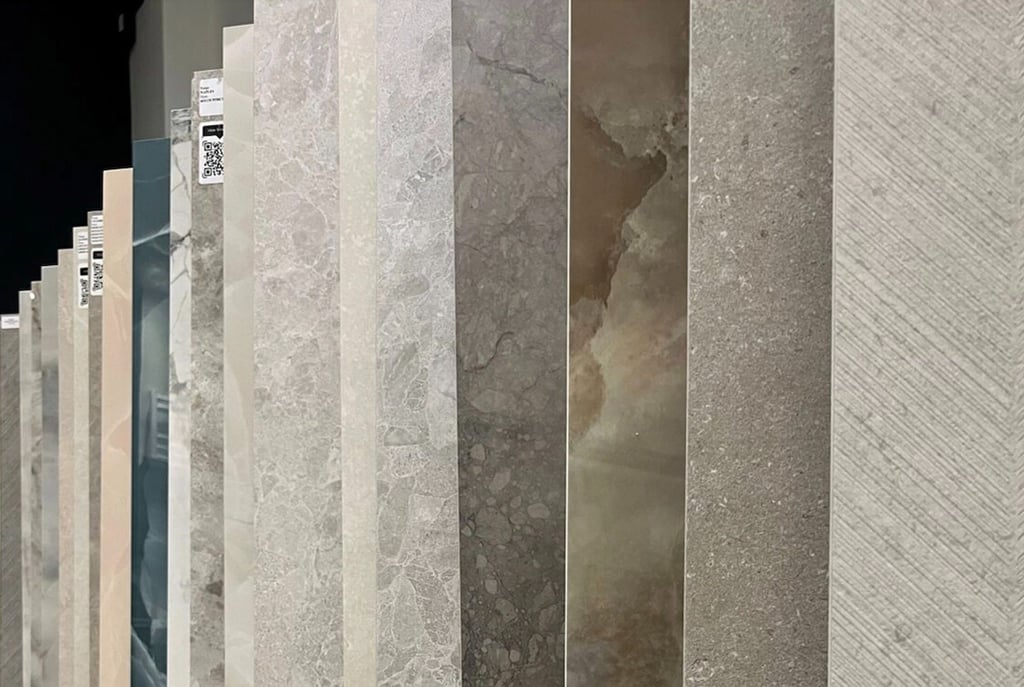
Tile size and thickness play a major role in both the aesthetic and practicality of a bathroom.
Smaller format tiles are easier to handle, require less specialist equipment, and carry a lower risk of breakage or installation issues. Typical sizes include:
- 60 × 30cm
- 60 × 60cm
These are well suited to premium bathrooms where a balance of style, efficiency, and cost is important.
As tile sizes increase, so does the complexity of installation. Larger format tiles such as:
- 90 × 90cm
- 120 × 60cm
- 120 × 120cm
require more labour, larger tools, suction lifters, and precision levelling systems to achieve a clean, consistent finish.
Fewer grout lines create a more seamless, high-end look, but the risks during handling and installation also increase.
Tile thickness is another important factor. Larger tiles are often available in different thicknesses, typically around 6mm to 12mm. A 120 × 120cm tile at 12mm thick is significantly heavier than a 6mm version of the same size, requiring more careful handling and, in many cases, additional manpower.
Choosing the right tile size and thickness is not just about appearance. It directly affects installation time, cost, and the level of expertise required to achieve a high-quality finish.
Extra Large Format Slabs
Some projects use porcelain slabs, which can be as large as:
- 240 × 120cm
- 280 × 120cm
- 320 × 160cm
These dramatically reduce grout lines and create a clean, architectural look that many designers favour.
However, installing slabs of this size is significantly more demanding. Even at 6mm thickness, they are large, heavy, and fragile. They must be transported, cut, and installed using specialist equipment and often require multiple installers.
This typically includes:
- Specialist cutting tables
- Rail cutters
- Suction frames
- Levelling systems
Preparation of walls and floors becomes far more critical, as even small imperfections can lead to lippage or cracking at this scale.
Due to the size, handling requirements, and level of precision involved, slab installations can be significantly more expensive. In many cases, installation alone can cost £1,000 upwards per slab, depending on who is taking responsibility for the risk of breakages.
While the finished result can be striking, the complexity and labour involved make slab installations far more demanding than standard tiling.
KONNECT WITH US
SEND US A MESSAGE
© 2026. All rights reserved.
Tel
01244 848 691